
Coinjock, NC, United States
Knot Three | Dog-Friendly •Balcony Overlooking ICW
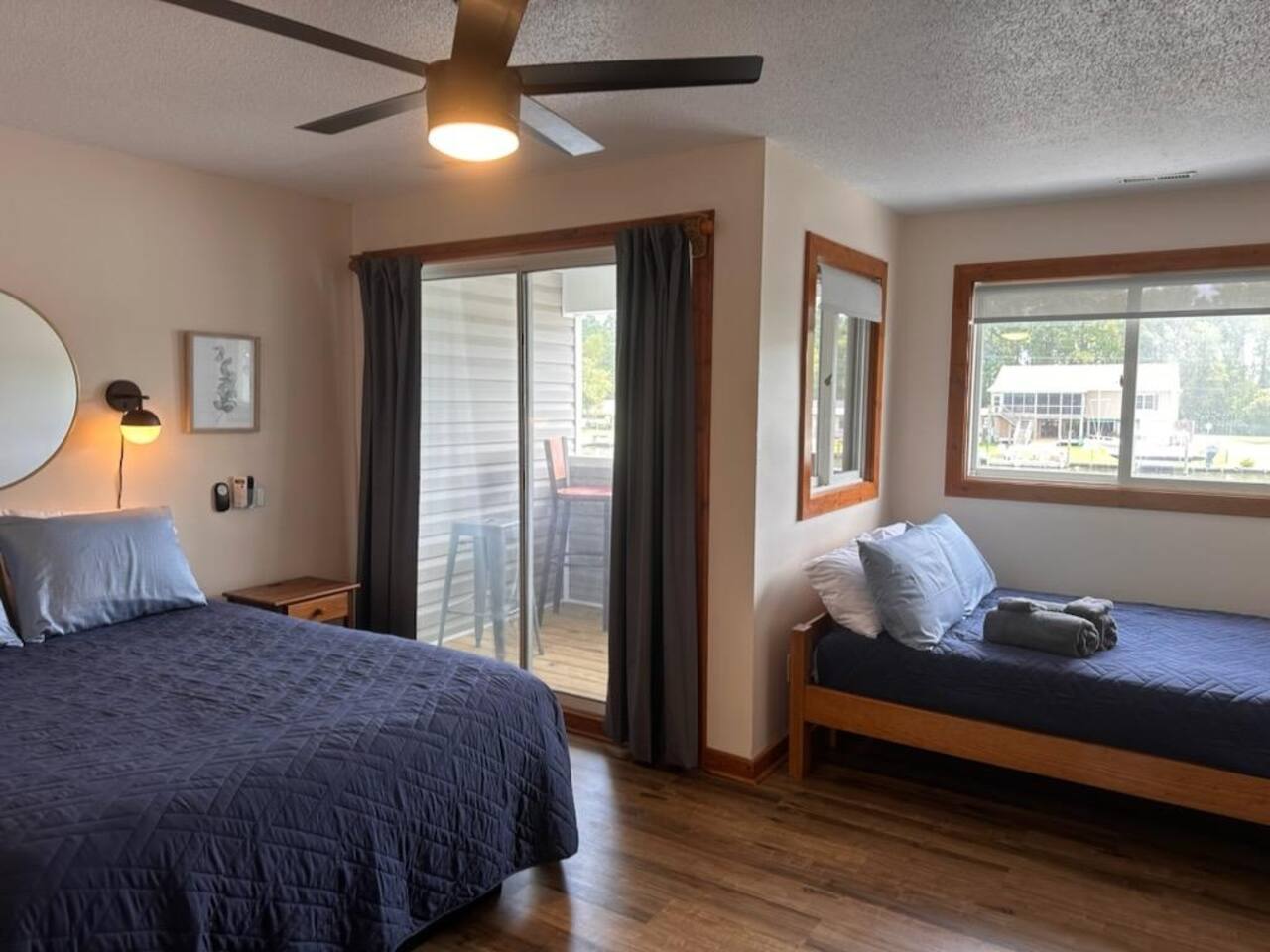
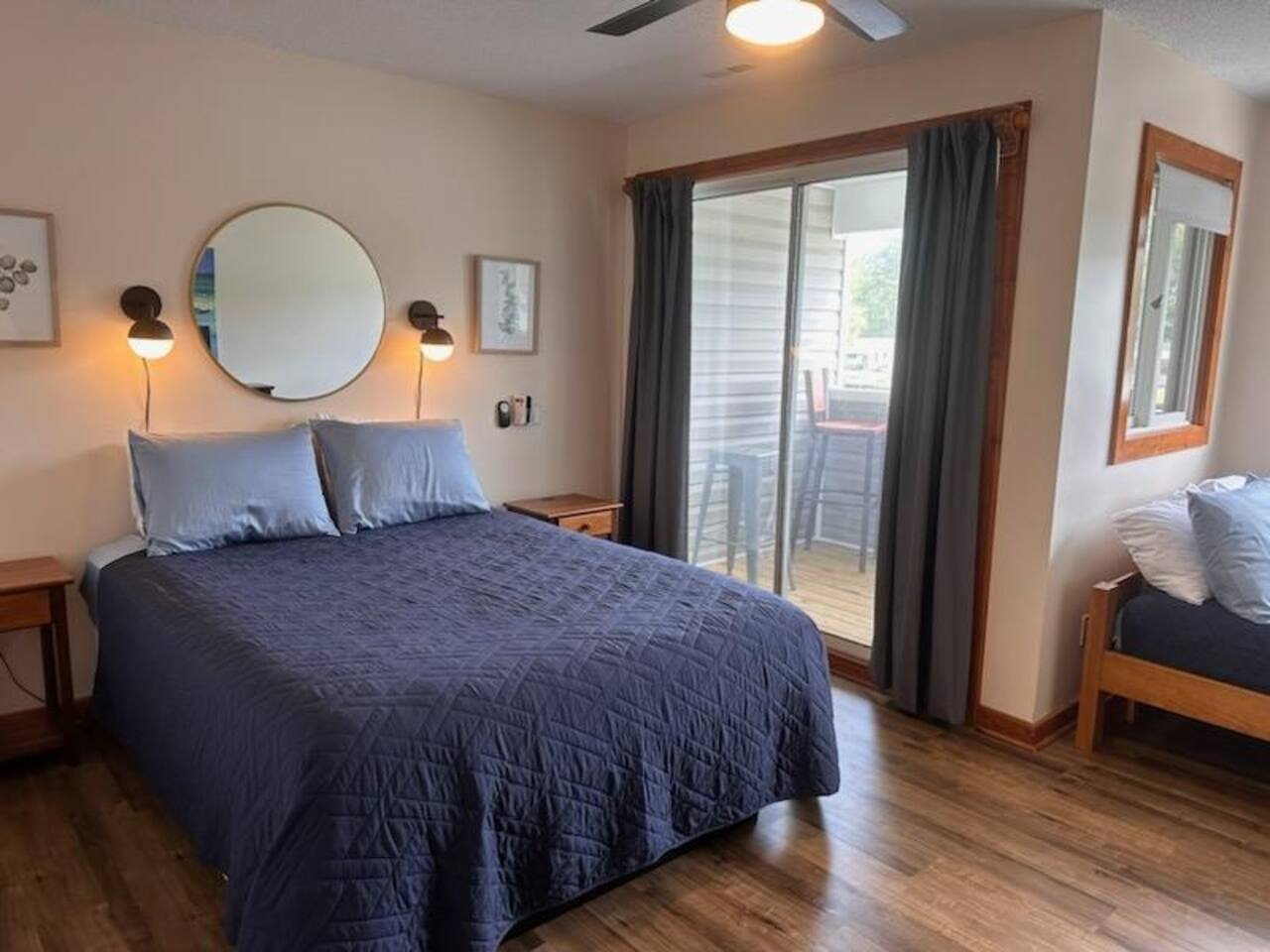
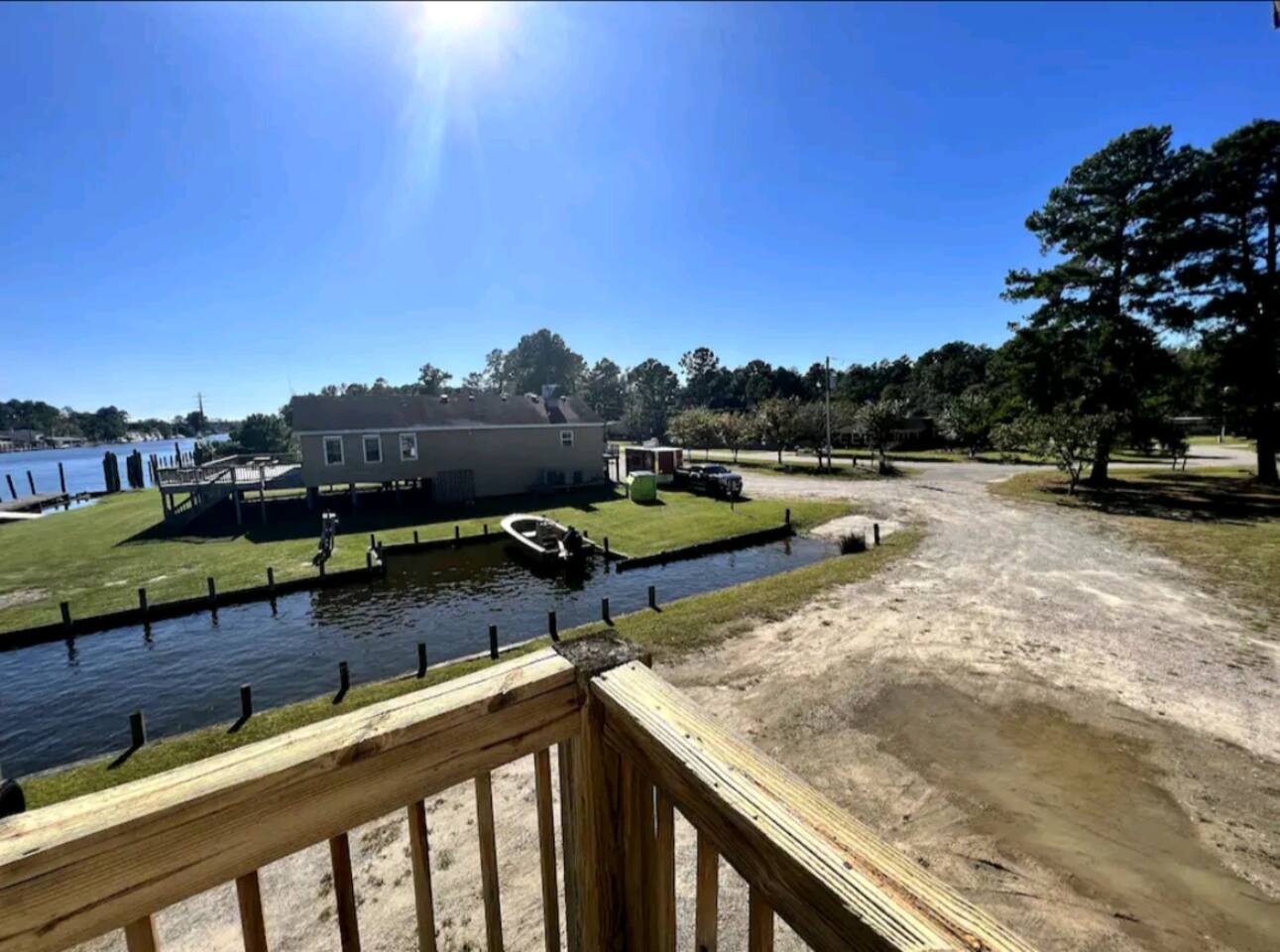
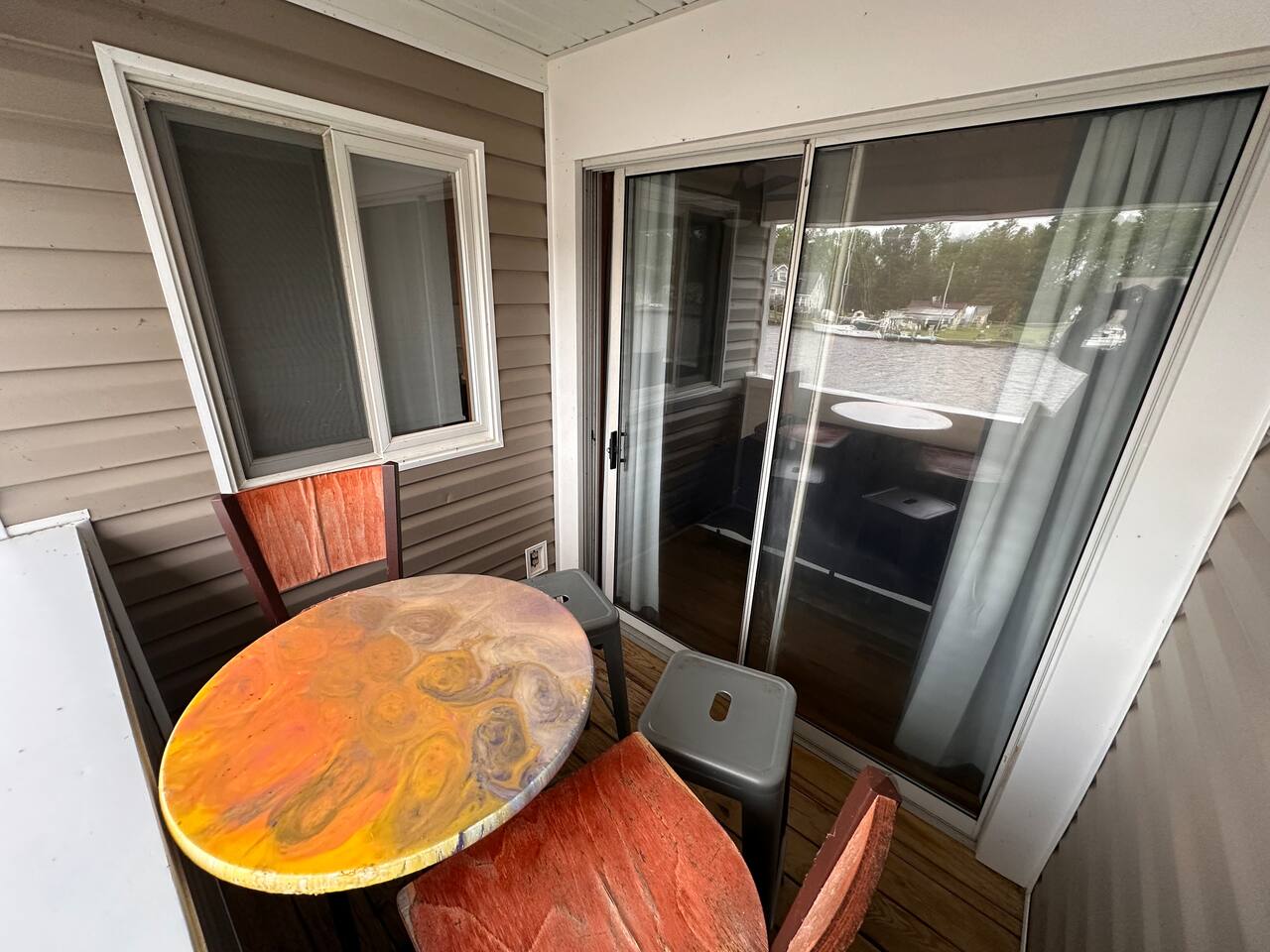
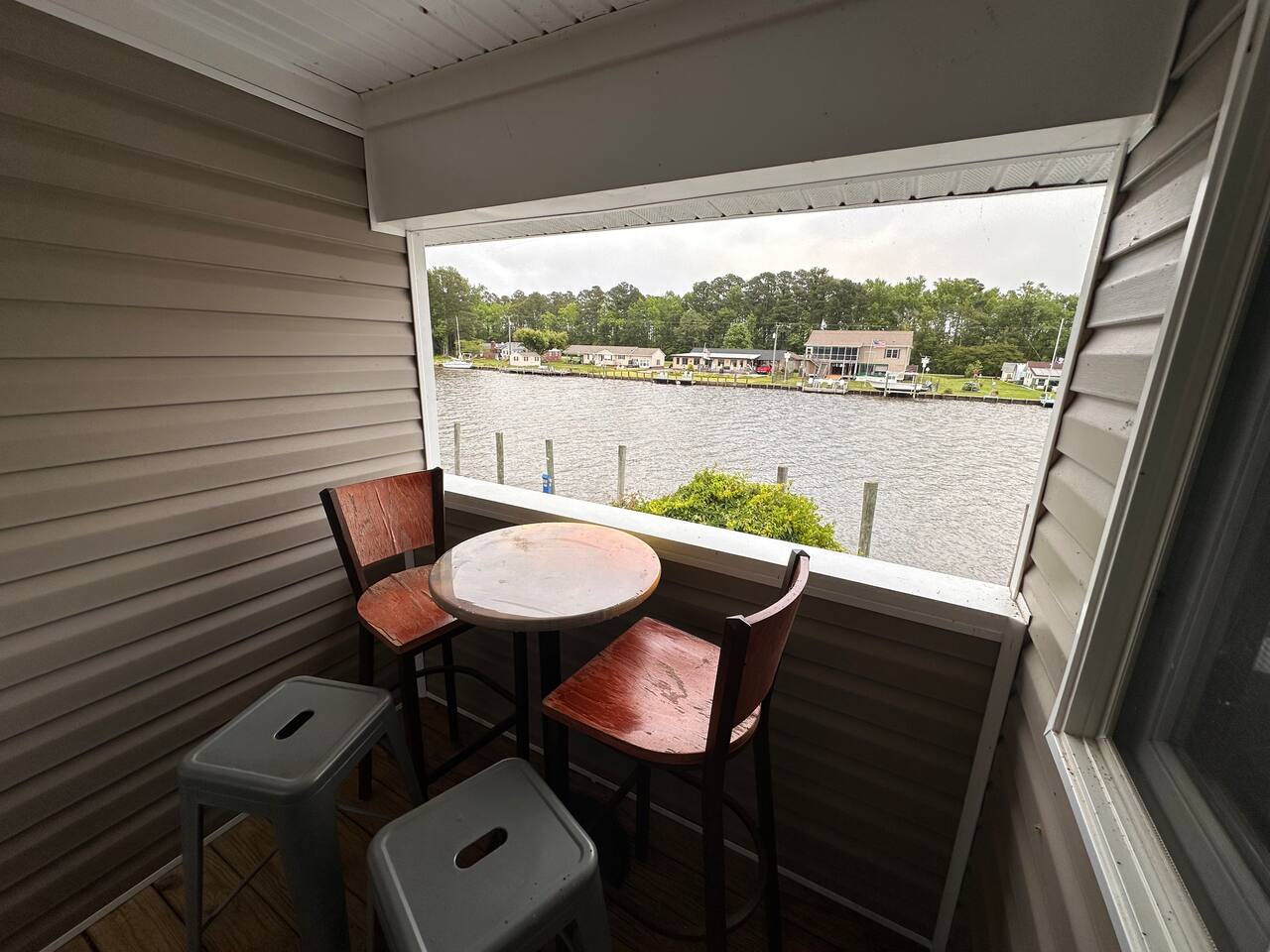
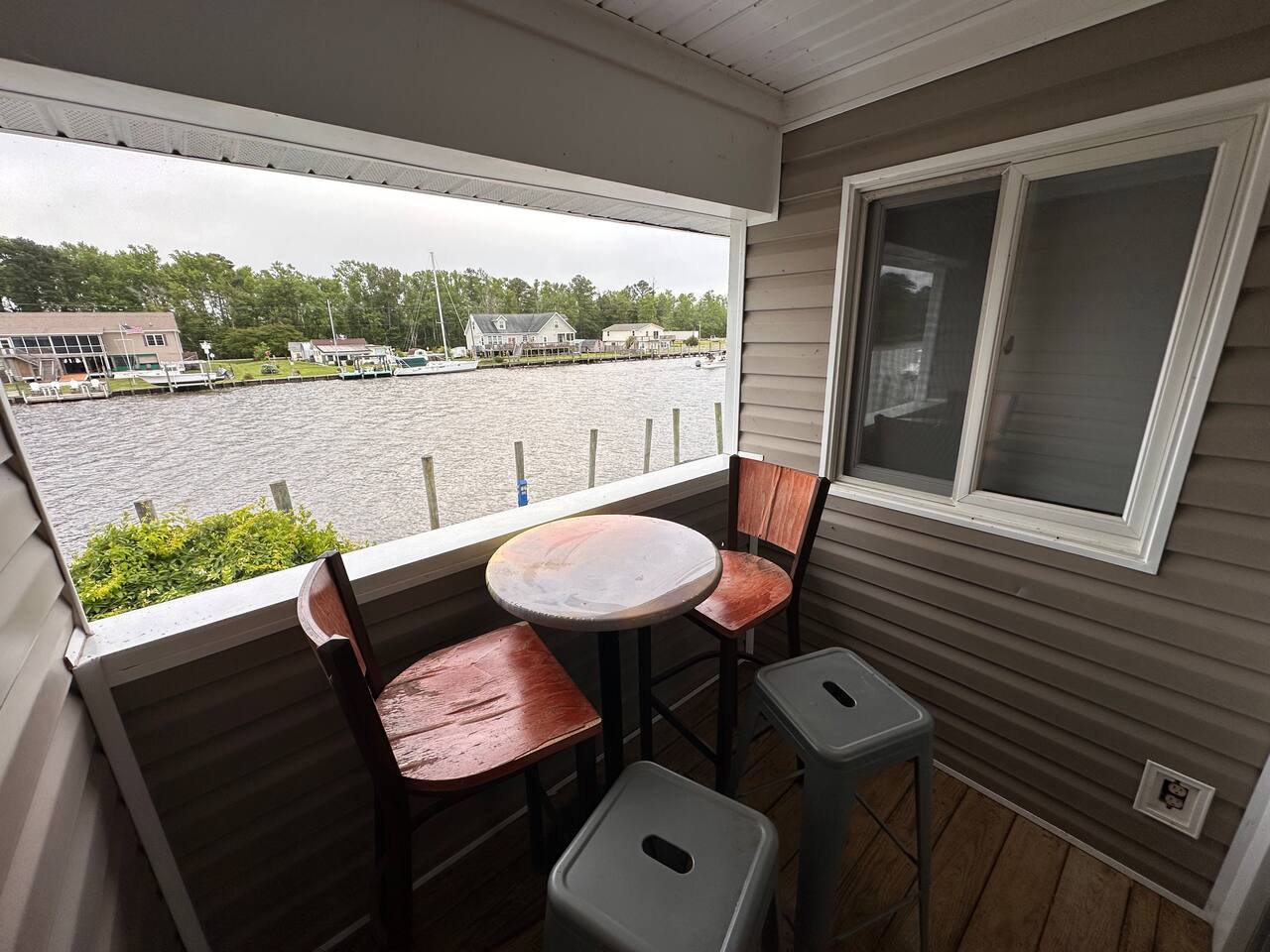
For Travelers Who Crave the Water, the Wind, & a Touch of the Unexpected! Drop anchor at Knot Three, your laid-back launchpad for Outer Banks adventure. Tucked just off the beaten path on the second floor of a waterfront hideaway, this room offers uninterrupted views of the Intracoastal Waterway (ICW)—a front-row seat to passing boats, golden sunsets, & the slow rhythm of coastal life.🐾 Dog-friendly, so your co-captain can come along for the ride. 🧭 Come for the salt air. Stay for the stories!
Good to know
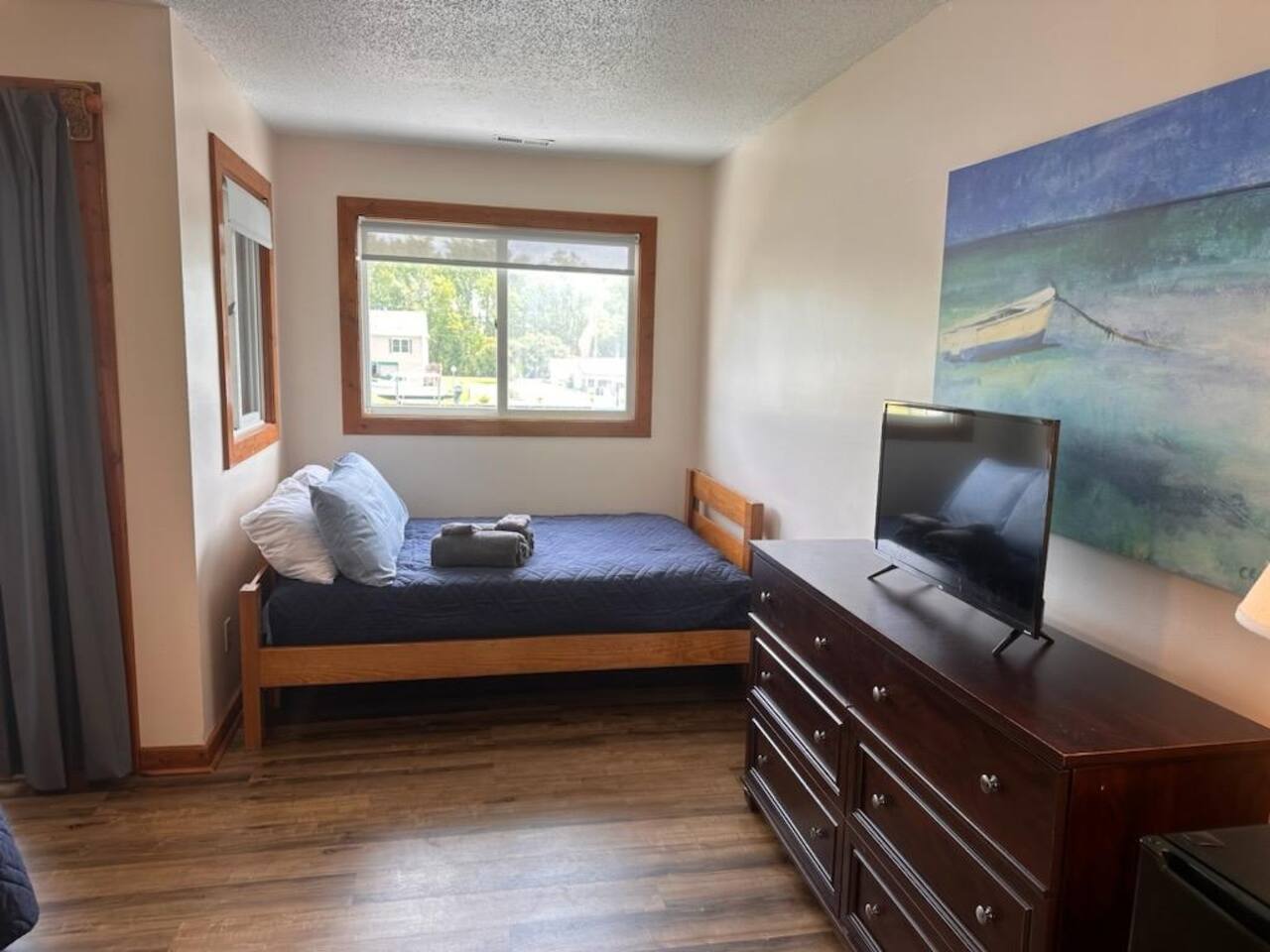
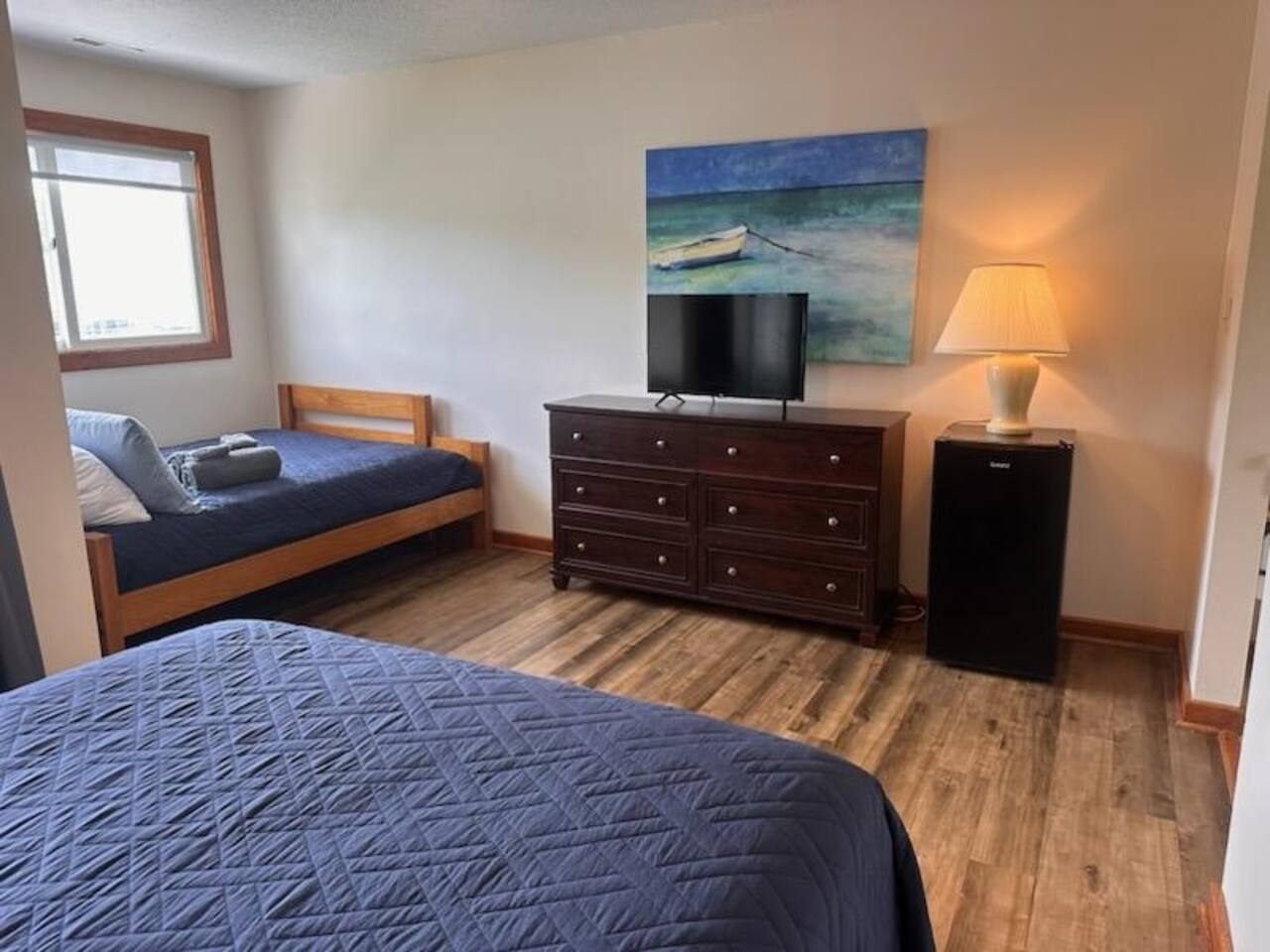
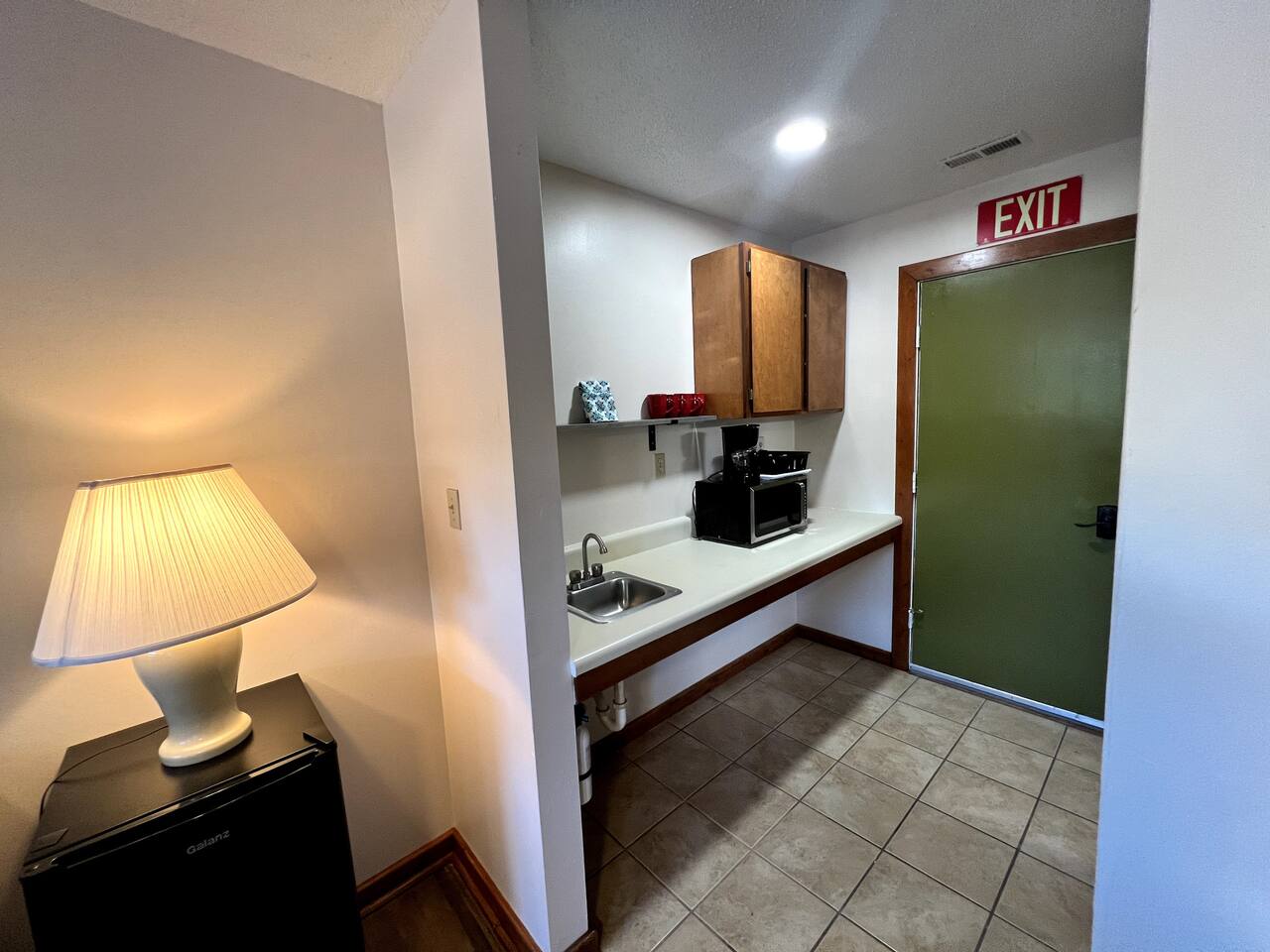
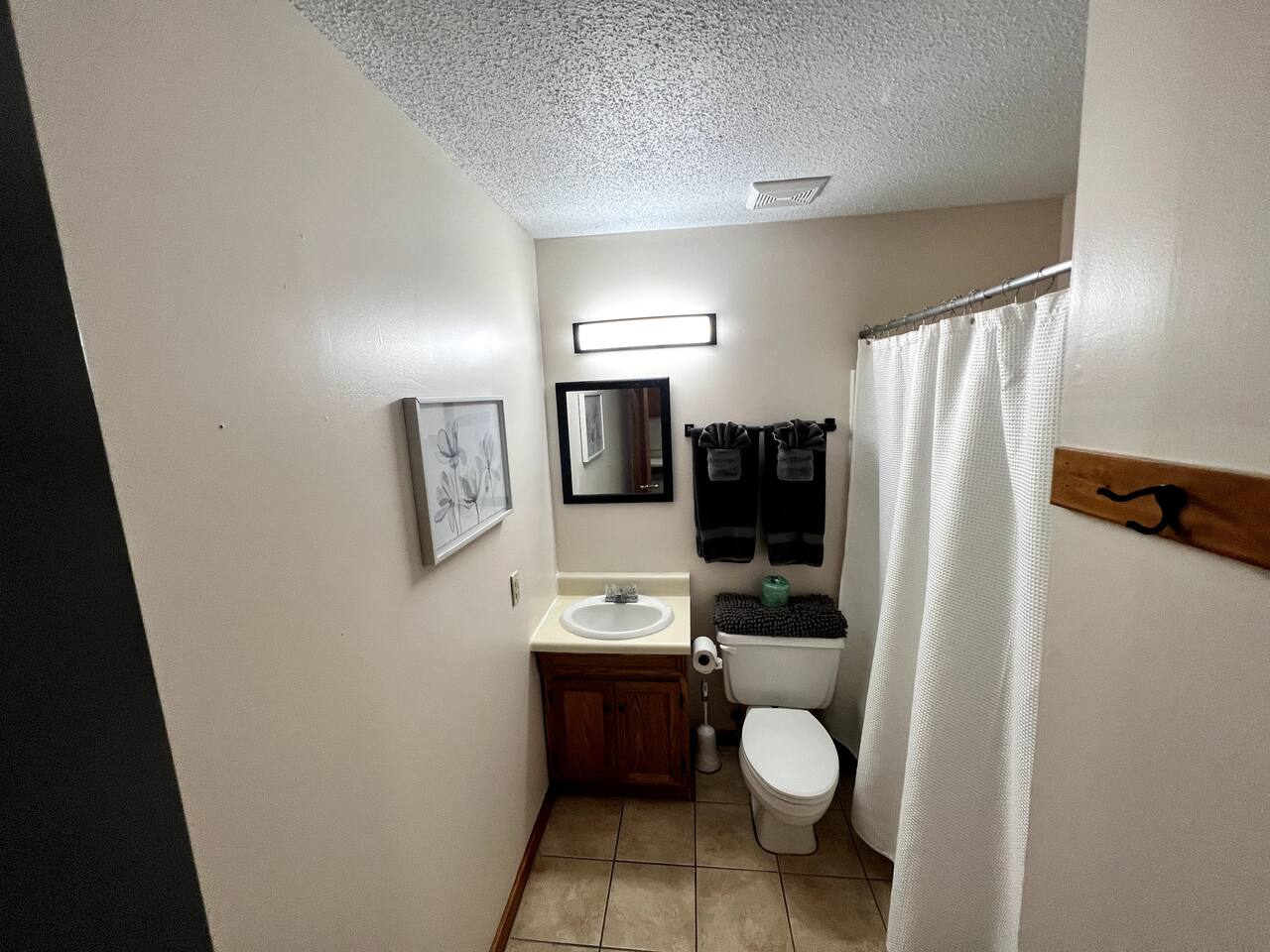
🛏️ What You’ll Find: Two cozy beds (one queen & one double) for post-exploration crashing A no-fuss kitchenette (microwave, mini fridge, & essentials) for easy meals A private balcony perfect for morning coffee, evening drinks, or plotting your next move Water views of Coinjock Marina & Restaurant—only 5 mins away Access to a boat ramp and slips (extra charge) for seafarers bringing their own vessel 30 minutes to the OBX beaches and Kitty Hawk Pier This isn’t a luxury resort—it’s a rest stop for the curious, the spontaneous, and the ones who always want to see what’s around the next bend in the road (or river). Whether you're chasing fish, waves, or memories, Knot Three offers a simple, scenic stay with character, charm, and killer views. Perched on the Intracoastal Waterway, a hotel style room with two beds, ceiling fan, Smart TV (no cable), full bathroom, coffee maker, dorm refrigerator, microwave and coffee pot. NOTE: Building is older as pictured - dock infront of the building is not accessible at this time. Walk down approximately 100 feet where dock is accessible to you to fish from and enjoy the waterway up close and personal! Due to the remote location on the Intracoastal Waterway you will unplug here as WIFI is not reliable. Come enjoy all that comes with living on the Intracoastal Waterway, the boats passing by, nature and a home cooked meals at the Coinjock Marina Restaurant!
House Rules
Detailed house rules will be sent to you via AirBNB message as soon as your reservation is confirmed. If you have questions about these prior to booking please do ask your host! If you will be bringing a pet please notify your host immediately upon booking for approval by stating both the breed and size. Dogs are the only pets allowed and the maximum amount of dogs per reservation is one. Due to close proximity to other guests no aggressive breeds are allowed on property. All dogs are to be kept on lead at all time when outside of the room. Dog owner is responsible for picking up all waste from their dog and disposing in the outside trash bins.
Other Details to Note
If you need additional space there are 3 additional rooms available. Two rooms accommodate 2 guests and two rooms accommodate 4 guests. You can view and book these additional spaces under the host profile. Please let your host know if you are in need of a boat slip during your stay. NOTE: If using boat ramp at the Hotel there is an 8ft clearance. Otherwise there is a boat ramp just a mile down from Coinjock Marina on Waterlilly Rd with no height restrictions.
What this place offers
Common
- Air conditioning
- Dishes and silverware
- Essentials Towels, bed sheets, soap, toilet paper, and pillows
- Hair dryer
- Heating Central heating or a heater in the listing
- Kitchen Space where guests can cook their own meals
- Dedicated workspace
- TV
- Wifi
Bathroom
- Bathtub
- Hot Water
Bedroom and laundry
- Bed linens
- Hangers
- Clothing storage
Common
- Air conditioning
- Dishes and silverware
- Essentials Towels, bed sheets, soap, toilet paper, and pillows
- Hair dryer
- Heating Central heating or a heater in the listing
- Kitchen Space where guests can cook their own meals
- Dedicated workspace
- TV
- Wifi
Bathroom
- Bathtub
- Hot Water
Bedroom and laundry
- Bed linens
- Hangers
- Clothing storage
Heating and cooling
- Ceiling fan
Home safety
- Carbon monoxide detector
- Fire extinguisher
- First aid kit
- Smoke detector
Kitchen and dining
- Coffee
- Coffee maker
- Microwave
- Mini Fridge
Location features
- Laundromat nearby
- Private entrance Separate street or building entrance
- Waterfront
Outdoors
- Garden or backyard
- Outdoor seating
- Patio or balcony
Parking and facilities
- Free parking on premises
Services
- Long term stays allowed Allow stay for 28 days or more
Accessibility and Availability
Neighborhood
Visitors to coastal North Carolina will most likely cross the Intracoastal Waterway during some portion of their expedition, and there's a good chance that they'll cross this massive water route multiple times. Extending all the way from the northern region of the country to the Gulf Coast, the waterway, which began as an essential trade route for shipping companies, is now more commonly used as a recreational trail for North Carolina sailors and boaters who want to explore the depth of the East Coast without straying too far from the Atlantic beaches. The Outer Banks runs parallel to the waterway, and visitors who venture inland to explore the small towns of the Inner Banks will come in contact with the waterway on a regular basis. Lined with shops, marinas, and waterfront restaurants, and busy on warm summer days with maritime traffic in the middle of a 3,000 mile trip, or just local boaters out for an afternoon cruise, the Intracoastal Waterway is a unique portion of the Outer Banks region, and definitely worth a visit for maritime lovers of all varieties. Geography of the Intracoastal Waterway Nationally, the Intracoastal Waterway extends 3,000 miles from the heart of New York to the Gulf of Mexico facing beaches before trickling north, and is a significant portion of "America's Great Loop," an extensive waterway that literally loops from the East Coast to the Gulf of Mexico and then winds back up through the central states before hitting the Great Lakes region. Obviously, a cruise along the entirety of this waterway, which basically circles around half of the country, is an adventure best left to travelers with a few months on their hands and a love of cross-country travel. Locally, North Carolina visitors who aren't on board for a 3,000 mile trip will find plenty of scenic portions of the Intracoastal Waterway that run through the state, often along the Outer and Inner Banks' backyards. Along the Outer Banks, the waterway begins in northern Currituck County where it trickles south in two distinct routes: one that winds through the Great Dismal Swamp near Edenton and Elizabeth City and one route that is much wider and borders mainland Currituck County. These two routes combine in the Albemarle Sound, and for 20 or so miles, the Intracoastal Waterway turns into a wide-open parcel of soundfront until it connects to East Lake on the western edge of Dare County. From there, the waterway narrows significantly as it cuts through the mainland across Columbia and skirts past Tyrell County and the Lake Mattamuskeet National Wildlife Refuge. The Intracoastal Waterway widens again as it joins with the open waters of the Pamlico Sound in Hyde County, and continues to hug the mainland coastline bordering the sound until it reaches Cedar Island, where it cuts across a marshy waterway into Beaufort and continues south down the coastline. During the Intracoastal Waterway's route through the northern half of North Carolina, the waterway is always about 10-50 miles away from the Outer Banks. The route itself is incredibly diverse through all portions, sometimes consisting of a sail through miles of open sound water, and sometimes consisting of narrow waterways that are bordered by marshes, swamps or thick patches of dense forest. Essentially, mariners who travel just this small portion of Intracoastal Waterway, located parallel to the Outer Banks, will an enjoy a cross section of what the route in its 3,000 mile entirety is all about. With scenic views all around, and charming marinas, restaurants and shops located through the passage for the convenience of mariners, a simple trip exploring this Inner Banks region of the Intracoastal Waterway will certainly feel like an enjoyable, worldly adventure. History of the Intracoastal Waterway Even though the Intracoastal Waterway is relatively new by world history standards, being officially developed in the 1800s, the history of transporting goods along the Inner Banks is as old as the country itself. Beginning with the settlements along the Albemarle region and the Jamestown colony in Virginia, it soon became crystal clear that traders and shipping vessels needs an easier way to access multiple parts of the country that did not entail a long trip through the Atlantic Ocean. After all, as early as the 1500s, the massive and dangerous Diamond Shoals off the coast of the Outer Banks were already causing hundreds of shipwrecks a year, and an easier route was needed for both the safety of the ships regularly coming to ports along the East Coast, and to accommodate smaller vessels. As early as the years following the American Revolution, plans were in the works to create a water connection between the villages and towns along northeaster North Carolina and Virginia, and in 1805, work began on digging and creating the Dismal Swamp canal, the older portion of the Intracoastal Waterway which runs through northern North Carolina and the Great Dismal Swamp. Completed in 1829, the canal was certainly a shortcut for many mariners, but unfortunately did not accommodate large vessels. A second, parallel canal, the Albemarle and Chesapeake Canal, was completed in 1859 to provide a wider route. In the decades that followed, the US Army Corps of Engineers planned out various ways to create an effective trade route from Boston, MA to Beaufort, NC, and eventually submitted a proposal to the US Government to purchase certain stretches of land and marshlands, including the two 1800s canals, to create this extensive waterway. Congress agreed, and in 1913, work began on building the official "Inland Waterway from Norfolk, VA to Beaufort Inlet, NC." Most of the 120 mile stretch of waterway relied on the calmer sound waters of the Albemarle and Pamlico Sounds, however new routes had to be cut through Cedar Island, Hyde and Tyrell Counties to avoid shallow or treacherous portions, and to create an easier-to-travel waterway. The US Army Corps of Engineers also made improvements to the existing Dismal Swamp canal, making it wider and removing excess trees and decries that had grown up along the waterway in the past hundred years. The Inland Waterway was complete by 1932, and by that point, the US Government was hard at work creating other watery routes to combine and create the entire Intracoastal Waterway. While large cargo ships and some sailors still prefer to stick to the Atlantic Ocean coastline, the waterway effectively opened up a new route to smaller traders and shipping businesses, commercial fishermen, and recreational mariners, and is still enjoyed today as one of the most unique and scenic ways to take a "road trip" along the Carolina coastline. Visiting the Intracoastal Waterway Most visitors to the Outer Banks will only notice the Intracoastal Waterway via the road signs and bridges that are located en route to the Outer Banks. Traveling from the north, visitors will cross over the Intracoastal Waterway on a small bridge on US 158 in Currituck County, and will run parallel to the waterway for the length of their trip down the mainland to the Wright Memorial Bridge to the Outer Banks. Travelers from the western part of the state will have a much longer Intracoastal Waterway crossing at the nearly 5 mile Alligator River Bridge which stretches across East Lake, one of the wider portions of the Intracoastal Waterway. This bridge doubles as a draw bridge to accommodate larger vessels passing through along the waterway, and it's not unusual on a bright and sunny day for traffic to pause while the bridge opens and allows mariners cruising along the Intracoastal Waterway to pass through. When this happens, it presents a perfect opportunity to step out of the vehicle for a few minutes, enjoy a nice stretch and a little salt air, and take a good look around at the gorgeous waterway views. Visitors from the south who head to the Outer Banks along the mainland via US 17 and US 264 will cross the waterway multiple times, through...
Guest Access
You will have complete access to your room, the grounds, dock slip and boat ramp if needed and we welcome you to the other-side of the ICW to visit Coinjock Marina - Ship Store for convenience items and Restaurant! NOTE: Access to Marina from your room is by car or boat. Walking is really not a feasible option. *Special Discount for our guests on beach rental supplies & set up between Duck to South Nags Head! Any Questions - please ask your host! *Discount to Local Favorite Restaurant!
Reviews



Find us
Driving by car or by boat is best! Uber/Lyft/local taxi may be available but can be limited services.
Sorry we're unable to show you the location for this property
Approximate location. Full address will be provided on booking.